
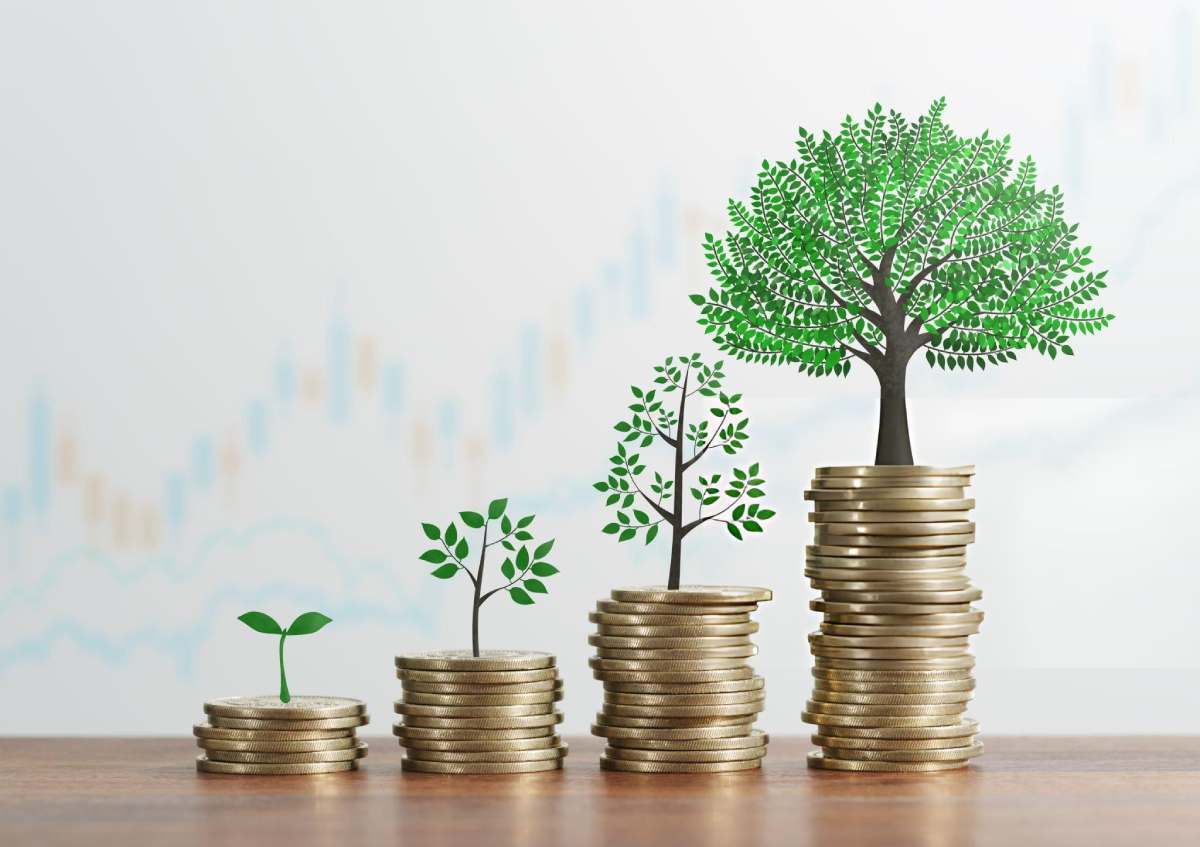
Compound interest is often hailed as one of the most powerful concepts in personal finance. Whether you are a student just starting to save or a professional planning for retirement, understanding how compound interest works can be the transformation between a modest nest egg and significant long-term wealth.
Often attributed to Albert Einstein as the “eighth wonder of the world,” compound interest allows your money to work for you, growing at an exponential rate over time.
What is Compound Interest?
In simple terms, compound interest is “interest on interest”. Unlike simple interest, which is calculated only on the initial amount you deposit (the principal), compound interest is planned on the principal plus any interest that has already accumulated from previous periods.
This means that in the first period, you earn interest on your original investment. In the second period, you earn interest on that original investment plus the interest you earned in the first period. This cycle continues, creating a “snowball effect” where your balance grows faster and quicker with each passing year.
Compound Interest vs. Simple Interest: The Key Differences
To truly appreciate compounding, it is helpful to compare it with simple interest.
| Feature | Simple Interest | Compound Interest |
| Calculation Basis | Only on the original principal | On principal + accumulated interest |
| Growth Pattern | Linear (steady, constant growth) | Exponential (accelerating growth) |
| Total Returns | Lower over the long term | Significantly higher over time |
| Common Uses | Short-term loans, car loans | Savings, mutual funds, retirement |
For example, if you invest $1,000 at a 5% simple interest rate for 10 years, you would earn $50 every year, totaling $500 in interest. However, with compound interest at the same rate, your total interest would be roughly $628.89 because you are earning money on an ever-increasing balance.
The Critical Role of Time
Time is the most significant factor in the compounding equation. Because the growth is exponential, the most dramatic gains happen in the later years of an investment. This is why starting early—even with small amounts—is often more effective than starting later with larger sums.
Consider two investors:
- Investor Astarts at age 25, investing $2,000 annually for 10 years and then stops.
- Investor Bwaits until age 35 and then invests $2,000 annually for 30 years.
Even though Investor B contributed three times more money, Investor A may still end up with more wealth at age 65 because their early contributions had an extra decade to compound.
The Impact of Compounding Frequency
How often interest is added to your account also matters. The more frequently interest compounds, the higher your final balance will be. Common compounding frequencies include:
- Annually: Once per year.
- Quarterly: Four times per year.
- Monthly: Twelve times per year.
- Daily: 365 times per year.
If you have $10,000 at 5% interest for 10 years, annual compounding results in $16,288.95. Monthly compounding increases that to $16,470.09, and daily compounding pushes it slightly higher to $16,486.65.
Strategies to Maximize Your Compounding Gains
To make compound interest work for you at its highest capacity, consider these strategies:
- Start Early: Give your money as much time as possible to grow.
- Be Consistent: Regular, disciplined contributions (like a monthly SIP) add to your principal, amplifying the effect.
- Reinvest Your Returns: Instead of withdrawing dividends or interest, reinvest them to increase your compounding base.
- Check Fees and Taxes: High management fees or taxes can “leak” away your compounding potential. Utilize tax-advantaged accounts like 401(k)s or IRAs where possible.
- Avoid Early Withdrawals: Withdrawing funds early breaks the compounding cycle, forcing you to start the snowball from scratch.
The Double-Edged Sword: Compounding on Debt
While compound interest is an ally for savers, it can be an enemy for borrowers. Credit cards, for instance, often compound interest daily on unpaid balances. If you only make minimum payments, your debt can twisting out of control because you are essentially paying “interest on interest” back to the lender.
Understanding this helps prioritize paying down high-interest debt quickly to stop the negative compounding effect.
Conclusion
Compound interest is a fundamental pillar of wealth creation. By leveraging time, consistency, and reinvestment, anyone can turn modest savings into a substantial financial foundation. The key takeaway is simple: the best time to start was yesterday, but the second-best time is today.