
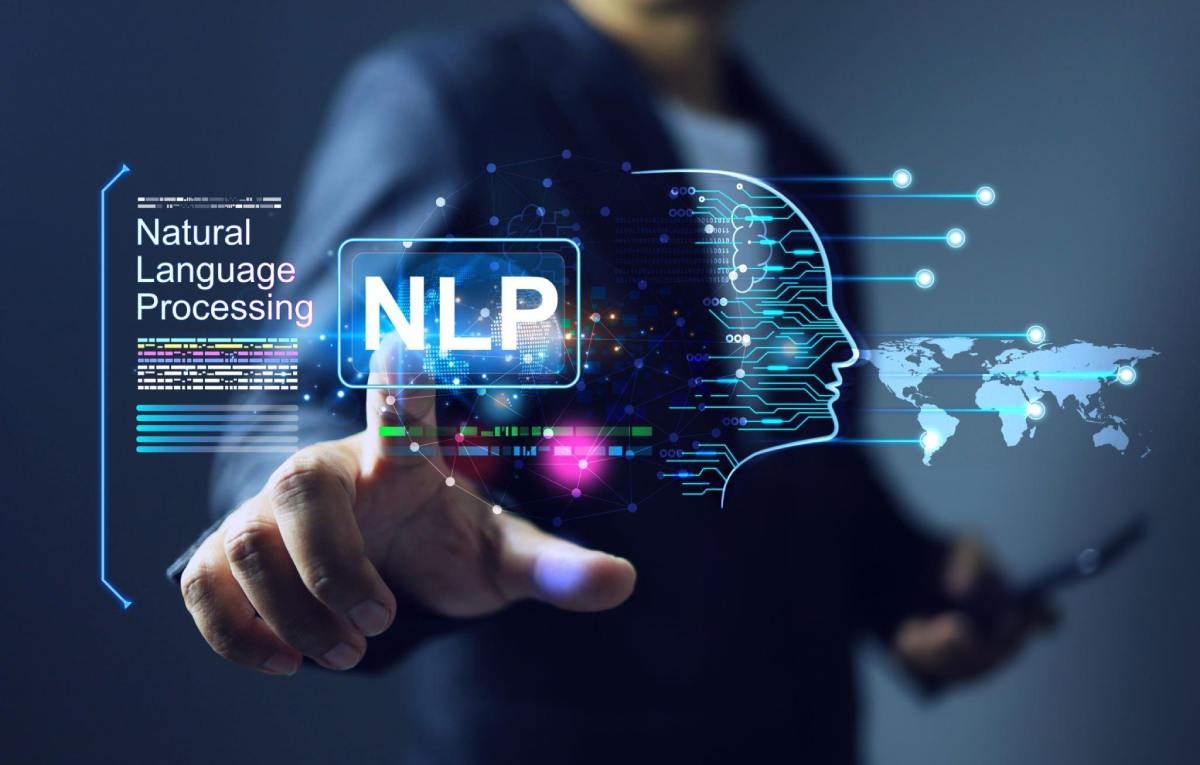
Natural Language Processing, or NLP, is the sophisticated branch of artificial intelligence that gives machines the ability to understand, interpret, and generate human language. While computers are native speakers of binary code—a rigid world of ones and zeros—human language is messy, sarcastic, evolving, and deeply rooted in context. NLP serves as the ultimate translator, bridging the gap between human intuition and machine logic.
In this exploration, we will dissect the mechanics of how machines “read,” the evolution from simple rules to massive neural networks, and how NLP is reshaping the modern world.
What is Natural Language Processing?
At its simplest, NLP is the intersection of linguistics, computer science, and AI. It aims to create systems that can process large amounts of natural language data to extract meaning. Unlike a simple search that looks for exact character matches, an NLP-enabled system understands the intent behind a query.
Human language is incredibly complex. A single word can have multiple meanings (polysemy), and the structure of a sentence (syntax) can completely change its message. NLP uses computational linguistics—the rule-based modeling of human language—combined with statistical, machine learning, and deep learning models to overcome these hurdles.
The Core Components: Syntax and Semantics
To understand a sentence, an NLP system must look at it from two primary angles: structure and meaning.
- Syntactic Analysis (Syntax):This refers to the arrangement of words in a sentence to make grammatical sense. NLP algorithms use syntax to understand the relationship between words. Techniques include:
- Tokenization:Breaking a sentence into smaller units, like words or phrases.
- Part-of-Speech Tagging:Identifying whether a word is a noun, verb, or adjective.
- Lemmatization and Stemming:Reducing a word to its root form (e.g., “running” becomes “run”).
- Semantic Analysis (Semantics):This is the process of understanding the meaning of words and how they are combined. It’s where the “intelligence” of AI truly shines. It involves:
- Word Sense Disambiguation:Figuring out which meaning of a word is intended based on context (e.g., a “bank” of a river vs. a “bank” for money).
- Named Entity Recognition (NER):Identifying and categorizing entities like people, places, and organizations.
The Evolution: From Rules to Transformers
The history of NLP is a journey from rigid programming to fluid learning.
In the early days, researchers used Rule-Based Systems. These were “if-then” structures where linguists wrote thousands of rules for the computer to follow. While accurate for simple tasks, they couldn’t scale to the infinite variations of real-world speech.
The 1990s saw the rise of Statistical NLP. Instead of rules, computers looked at the probability of certain words appearing together. This allowed for better translation and voice recognition.
The true revolution occurred with the introduction of Deep Learning and Neural Networks. Specifically, the Transformer architecture (introduced in 2017) changed everything. Transformers use a “Self-Attention” mechanism, allowing the model to look at every word in a sentence simultaneously to determine which words are most relevant to each other. This breakthrough paved the way for Large Language Models (LLMs) like GPT.
Real-World Applications of NLP
NLP is likely the form of AI you interact with most frequently. Its applications are ubiquitous:
- Virtual Assistants:Siri, Alexa, and Google Assistant use NLP to turn your voice into text, understand your command, and generate a spoken response.
- Sentiment Analysis:Companies use NLP to scan millions of social media posts or reviews to determine if the general public “feeling” toward their brand is positive, negative, or neutral.
- Machine Translation:Tools like Google Translate use neural machine translation to move between hundreds of languages while maintaining idiomatic meaning.
- Email Filtering:Your “Spam” folder is powered by NLP that recognizes the linguistic patterns of phishing and junk mail.
- Summarization:AI can now take a 50-page legal document and generate a five-bullet-point summary that captures the essential legal obligations.
Challenges: Context, Culture, and Sarcasm
Despite the power of LLMs, NLP is far from perfect. The “nuance gap” remains a significant challenge.
Sarcasm and Irony are notoriously difficult for machines. If a user says, “Oh great, another rainy day,” a basic NLP model might categorize “great” as positive sentiment, missing the underlying frustration.
Cultural Nuance and Dialects also pose problems. Language is tied to local culture, slang, and specific regional idioms. An AI trained primarily on American English may struggle to understand the nuances of Caribbean Patois or Australian slang.
Finally, there is the issue of Bias. Since NLP models are trained on internet data, they often inherit the prejudices, stereotypes, and toxic language found in those datasets. Ensuring “Fairness” in NLP is one of the most active areas of AI research today.
The Future: Toward Conversational Intelligence
We are moving away from “command-and-response” interactions and toward true Conversational AI. Future systems will have “Long-Term Memory,” remembering your preferences and past conversations to provide personalized assistance.
Furthermore, the rise of Multimodal NLP will allow AI to process language alongside images and video simultaneously—understanding that when a person points to a broken chair and says “Fix this,” the word “this” refers to the specific visual object in their hand.