
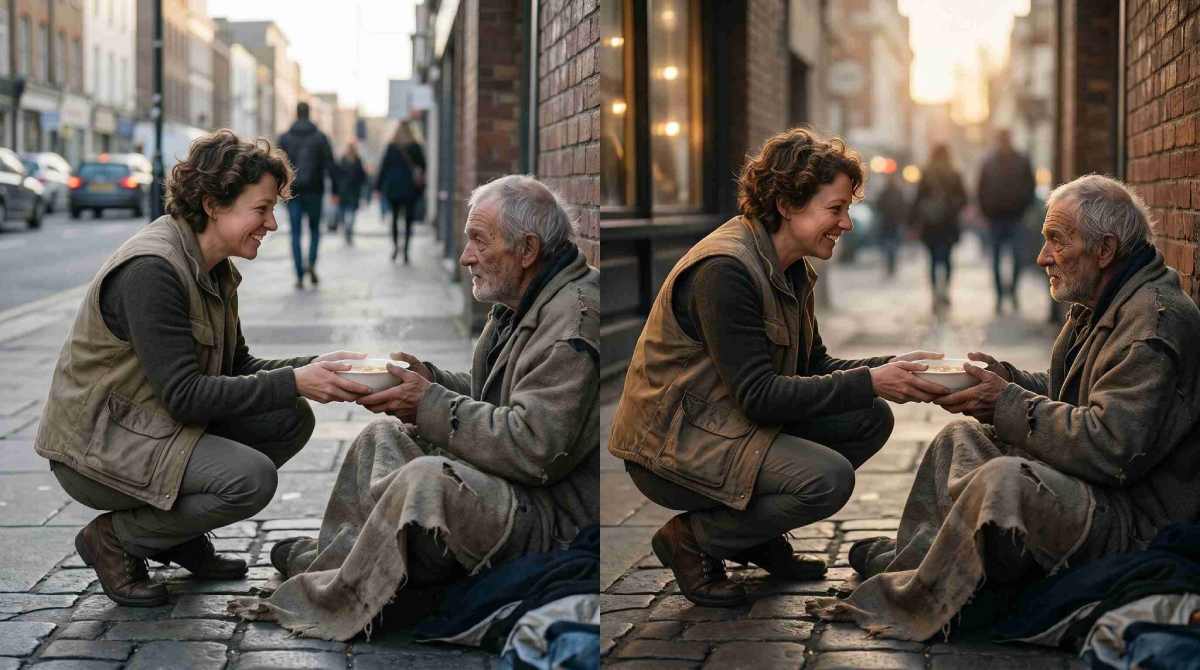
Most nonprofits don’t struggle with stories. They struggle with showing those stories in a way that people actually feel.
There is no shortage of real impact. Lives improved, communities supported, futures changed. But when it comes to turning those moments into compelling video content, most organizations hit the same wall.
Budget.
For years, high-quality video storytelling has been tied to production resources. Cameras, crews, editing, time. All of it adds up. And for nonprofits, every dollar spent on production is a dollar not spent on the cause.
That’s why many powerful stories never reach their full potential.
This is where things are starting to shift.
The Hidden Gap Between Impact and Visibility
Nonprofits operate in a space where emotion drives action.
Donations, volunteers, awareness. All of these depend on how well a story connects.
But here’s the problem.
The organizations doing the most meaningful work often have the least ability to present it visually.
Traditional video production requires:
- Planning and scripting
- On-ground shooting
- Editing and post-production
- Time and coordination across teams
For a nonprofit, this is not just expensive. It is impractical.
So the result is predictable.
Important stories get reduced to images and text. And in a video-first world, that limits reach.
Why Video Matters More Than Ever
Attention has shifted.
People scroll fast. They engage faster. And video has become the most effective way to stop that scroll.
For nonprofits, this matters because:
- Video increases emotional engagement
- It improves message clarity
- It drives higher conversion in campaigns
A well-told video can do what pages of text cannot.
But without the ability to produce video consistently, nonprofits are left behind.
From Production-Heavy to Input-Driven Storytelling
The biggest shift happening right now is not just about tools. It is about how content gets created.
Storytelling is no longer dependent on production infrastructure.
It is becoming input-driven.
Instead of asking “How do we shoot this?”, nonprofits can now ask:
“What do we want to say?”
With Seedance 2, the process starts with simple inputs:
- Real images from the field
- A written narrative
- A defined emotional tone
From there, everything changes.
How Seedance 2 Transforms the Process
Unlike traditional tools that rely only on prompts, Seedance 2 allows multiple inputs to work together.
Text, images, audio, and references combine into a single output. The result is a structured, multi-shot video with consistent visuals and synchronized sound.
This matters because nonprofit content is rarely polished.
It is real, raw, and often fragmented.
Seedance 2 does not require perfect inputs. It organizes what already exists.
If you look at how seedance 2.0 functions, the real strength lies in turning simple inputs into complete, narrative-driven videos without traditional production steps.
Turning Real Moments Into Complete Stories
Nonprofits already have meaningful content.
What they lack is structure.
A photo shows a moment. A quote expresses emotion. But neither tells the full story on its own.
Seedance 2 connects these elements.
An organization can take:
- A few real images
- A short narrative
- A basic emotional direction
And turn them into a cohesive video.
This allows stories to feel complete rather than fragmented.
And that difference directly impacts how audiences respond.
Speed Changes How Nonprofits Communicate
Time has always been a constraint.
Traditional video production can take weeks. For nonprofits, that often means missed opportunities.
With Seedance 2, that timeline changes completely.
Content can be created in hours.
This enables organizations to:
- Share updates quickly
- Respond to real-world events
- Maintain consistent communication
Speed is not just about efficiency. It is about staying relevant.
And in today’s digital landscape, relevance drives visibility.
Consistency Builds Trust Over Time
Trust is everything in the nonprofit space.
But trust is not built through a single campaign.
It comes from consistent communication.
One of the biggest challenges nonprofits face is maintaining that consistency due to limited resources.
Seedance 2 makes content creation repeatable.
Organizations can now:
- Share regular updates
- Keep their audience engaged
- Reinforce their mission continuously
Consistency creates familiarity. Familiarity builds trust. And trust drives support.
Smaller Teams, Bigger Output
Most nonprofits work with lean teams.
There is no dedicated production unit. Content creation is often handled alongside multiple responsibilities.
Seedance 2 reduces the complexity of video production by combining multiple steps into one workflow.
This allows teams to focus on:
- Crafting the story
- Defining the message
- Connecting with the audience
Instead of managing technical processes.
For nonprofits, this is not just a productivity boost. It is a shift in capability.
Maintaining Authenticity While Using AI
There is always skepticism around AI-generated content.
Will it feel real?
For nonprofits, authenticity is critical.
Seedance 2 addresses this by building on real inputs. It does not replace the story. It enhances it.
By using actual images, narratives, and emotional cues, the output remains grounded in reality.
This ensures that:
- Stories stay genuine
- Visuals reflect real impact
- Messaging remains trustworthy
The goal is not perfection. It is connection.
Scaling Stories Without Increasing Costs
Nonprofits need to communicate across multiple platforms.
They need content for:
- Social media
- Fundraising campaigns
- Awareness initiatives
- Different audience segments
Creating unique content for each channel using traditional methods is not sustainable.
Seedance 2 makes this scalable.
One story can be adapted into multiple formats quickly. Different versions can be created without repeating the entire process.
This allows organizations to expand their reach without increasing their budget.
That is a fundamental advantage.
Why This Shift Matters More Than It Seems
What is happening here is bigger than just a new tool.
It is a shift in access.
For years, high-quality storytelling was limited to those with resources.
Now, that barrier is being removed.
Nonprofits can compete not by spending more, but by telling better stories.
Higgsfield’s ecosystem supports this by making advanced video creation accessible without technical complexity.
Conclusion
Nonprofits have always had the stories that matter most.
What they lacked was the ability to present those stories effectively at scale.
Seedance 2 is changing that reality.
By removing the need for expensive production, it allows organizations to focus on what truly matters: communicating human impact.
The result is not just better content.
It is stronger connection, greater visibility, and ultimately, more meaningful change.